Bill Clinton Testifies on Epstein Link: What the Files Reveal
In a development that has sent ripples through political and legal circles, former President Bill Clinton recently provided a closed-door deposition before House lawmakers investigating the late convicted sex offender Jeffrey Epstein. This testimony, following his wife, former Secretary of State Hillary Clinton's appearance, marks a significant moment in the ongoing efforts to unravel the extensive network surrounding Epstein, the disgraced financier who died by suicide in a New York jail in 2019 while awaiting sex trafficking charges.
The spotlight on the clinton epstein timeline has intensified dramatically with the recent release of millions of pages of documents, commonly referred to as the "Epstein Files." These files, made public under the Epstein Files Transparency Act, have not only offered unprecedented insight into Epstein's activities but also reignited scrutiny of his associations with numerous prominent figures, including political leaders and celebrities.
The Epstein Files Transparency Act and Unprecedented Disclosures
A cornerstone of the renewed public and congressional interest is the monumental disclosure of documents under the Epstein Files Transparency Act. Signed into law by President Donald Trump in November, this act has compelled the Department of Justice (DOJ) to publish an astonishing volume of material. Earlier this year, more than 3 million pages of documents were released, a tranche that reportedly includes 2,000 videos and 180,000 images, bringing the total production to nearly 3.5 million pages. This sheer scale of information underscores the government's commitment to transparency surrounding Epstein's case and his far-reaching connections.
The recent testimony by Bill Clinton in Chappaqua, New York, adds a historic layer to these proceedings. It marks the first instance of a former U.S. president being compelled to testify before Congress. While the legal implications are significant, it's crucial to reiterate that Clinton has not been accused of any wrongdoing in relation to Epstein. His deposition, much like his wife’s, likely aims to provide clarity and context regarding his acknowledged past association with the financier.
Tracing the Connections: A Chronology of Association
Understanding the full scope of the relationship between Bill Clinton and Jeffrey Epstein requires a careful examination of the clinton epstein timeline, pieced together from public records, flight logs, and statements. Clinton has openly acknowledged a years-long relationship with Epstein, though he maintains that all contact ceased after Epstein was first accused of sex crimes.
- Early Donations: The earliest documented connection dates back to 1992, when Epstein made a $1,000 donation to Bill Clinton's presidential campaign. Further contributions followed, including a significant $20,000 to a joint fundraising committee with the Democratic Party in October 1996.
- White House Visits: Visitor logs confirm that Epstein made multiple visits to the White House during the 1990s, indicating a degree of access and interaction within the political sphere.
- The Disavowal: Despite these early ties, a spokesperson for the former Democratic president stated in 2019, and has since reiterated, that Clinton had "not spoken to Epstein in well over a decade" and "knows nothing about the terrible crimes" Epstein committed. This statement aims to draw a clear line in the timeline, separating his earlier association from Epstein's later criminal activities.
The complexity of these connections highlights the challenges in disentangling public figures from individuals who later face serious criminal charges. For high-profile individuals, associations, even if initially benign, can cast long shadows when the true nature of an individual's character and activities comes to light. It serves as a stark reminder of the importance of due diligence, even in social or philanthropic circles.
The Infamous Flights and the Quest for Clarity
Perhaps one of the most scrutinized aspects of the clinton epstein timeline involves the former president's travels on Epstein's private plane, often dubbed the "Lolita Express." Flight logs meticulously kept by one of Epstein's pilots, and subsequently used in court proceedings, reveal several trips:
- March 2002: Clinton flew from New York to Britain and back.
- May 2002: Between May 22 and May 25, Clinton traveled extensively, flying from Atsugi, Japan, to two locations in China, as well as to Singapore, Thailand, and Brunei.
These flights have fueled public speculation, largely due to the plane's notorious reputation and the nature of Epstein's subsequent convictions. However, Clinton has consistently maintained that he never visited Epstein's now infamous private island of Little St. James in the U.S. Virgin Islands. In his 2024 memoir, Clinton expressed deep regret over the association, writing, "Traveling on Epstein’s plane was not worth the years of questioning afterward. I wish I had never met him." This sentiment underscores the enduring controversy and the personal cost associated with his past ties to Epstein.
The public interest in these flights is understandable, given the context of Epstein's crimes. Yet, it is crucial to remember that mere presence on the plane, while raising questions, does not inherently imply complicity or knowledge of Epstein's illicit activities. The investigations continue to seek concrete evidence of wrongdoing, if any, by individuals associated with Epstein.
Renewed Scrutiny and Unanswered Questions
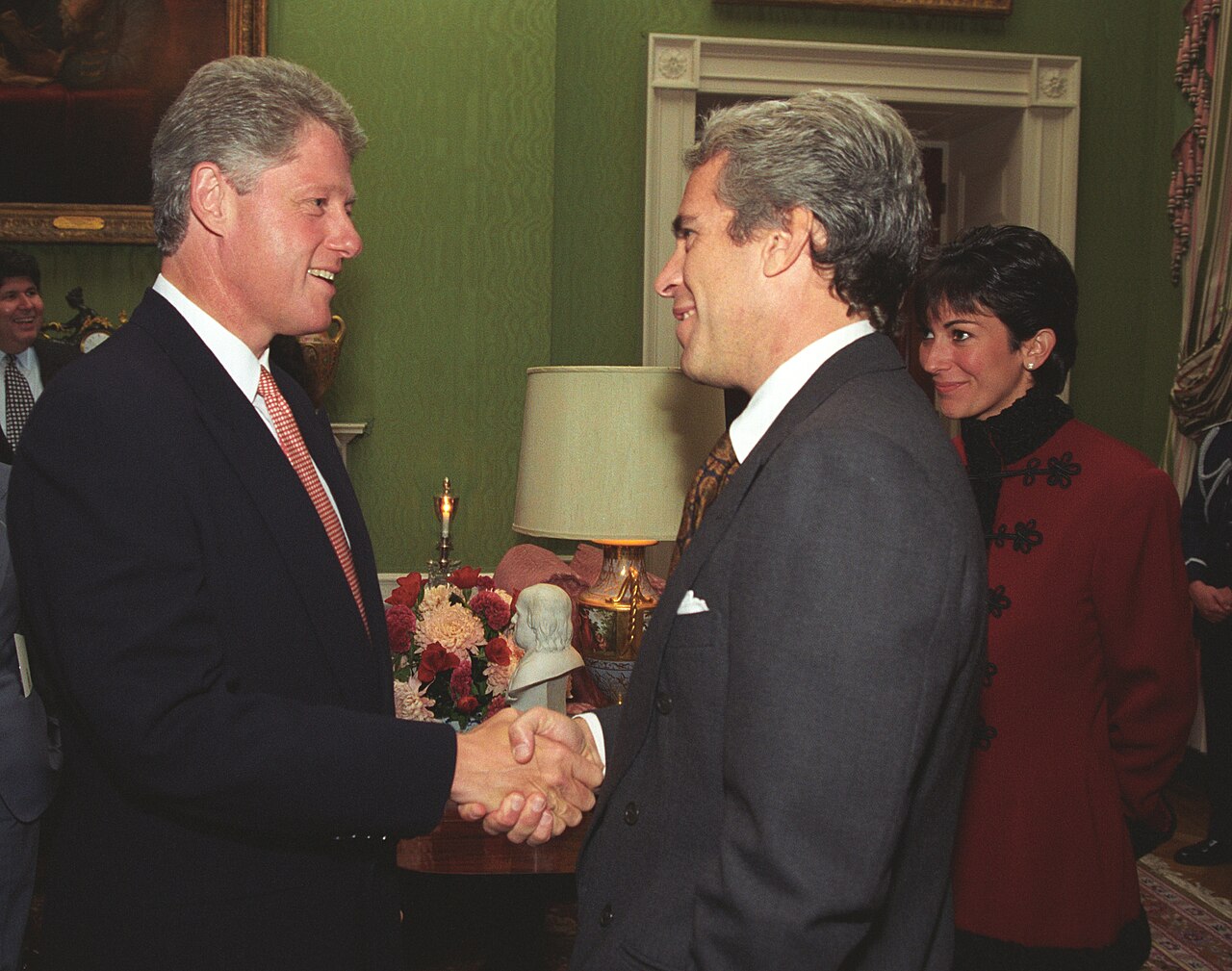
The release of the Epstein Files has, without a doubt, renewed scrutiny on Bill Clinton’s past association. The documents include several photos of the former president, some with women whose faces were redacted. These images, surfacing as part of the broader December document disclosure, depict Clinton in relaxed social settings, adding a visual dimension to the long-discussed connections.
Despite the volume of new information, it remains a critical point that no Epstein survivor or associate has ever made a public allegation of wrongdoing or inappropriate behavior by Clinton in connection with his prior relationship with Epstein. This distinction is vital: while the association is clear and documented, and the public's desire for answers is strong, allegations of direct involvement in Epstein's crimes against Clinton have not materialized.
The ongoing congressional investigation, coupled with the methodical release of documents by the DOJ, reflects a concerted effort to achieve transparency and accountability. For the public, navigating these revelations requires a nuanced approach, distinguishing between documented associations, confirmed facts, and speculative accusations. The clinton epstein timeline is complex, evolving with each new disclosure, demanding careful consideration of all available information.
Conclusion
The testimony of former President Bill Clinton before House lawmakers, alongside the unprecedented release of the Epstein Files, represents a pivotal moment in understanding the full scope of Jeffrey Epstein's network. While Clinton’s acknowledged past association with Epstein spans years, including campaign donations and travels on his private plane, he has consistently denied any contact after Epstein's criminal accusations came to light and maintains he was unaware of Epstein's horrific crimes. The meticulous examination of the clinton epstein timeline, from early political contributions to the infamous flights and his eventual disavowal, continues to be a subject of intense public and congressional interest. As the investigations progress and more details emerge from the millions of pages of documents, the focus remains on uncovering the truth, ensuring accountability, and providing justice for Epstein's victims, while carefully distinguishing between association and proven wrongdoing for all individuals mentioned.